Another pottery life lesson today. Every class I take I get a couple of gems. This one comes from the first class at the folk school. I also have a couple of others in the pipeline from the Raku class I took last weekend, so keep checking back. Creating pottery is a journey with so many great life metaphors! Hope you enjoy this one.
I am used to throwing pots on a wheel. I have done a limited amount of hand building, mainly because I love the feel of how the clay flows and moves in my hands. It’s magical. For me, it’s not even about the finished product, but more about the feeling that I am working with the clay. We are together in the process. All the outside world fades away. It is my therapy.
When you are working on the wheel there aren’t too many scraps. Maybe a bit of straightening of the lip, or a scraping of the bottom edge, but mostly the piece is one chunk of clay, shaped by my hands. It is a sensory experience and when I pull something beautiful out of mud I feel exhilarated. It is visceral. No intellect. No logic. Just feel the clay and let it move under your hands.
When hand building, it is different. In a way, there is more freedom in design. Your shape does not have to be round. It can have multiple sides. It can be elaborate or simple. You don’t have to center, which is one of the hardest parts of throwing on a wheel. You are not as limited in what you can create. The sky’s the limit.
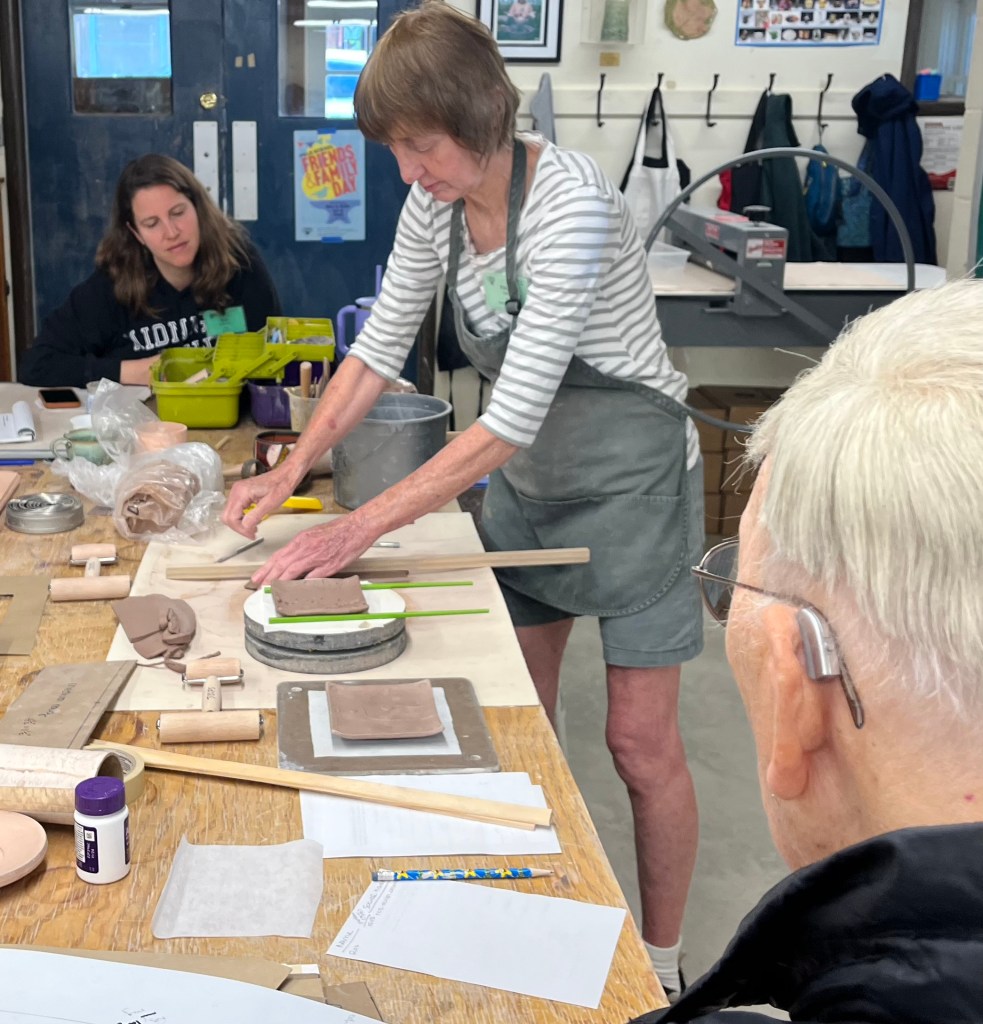
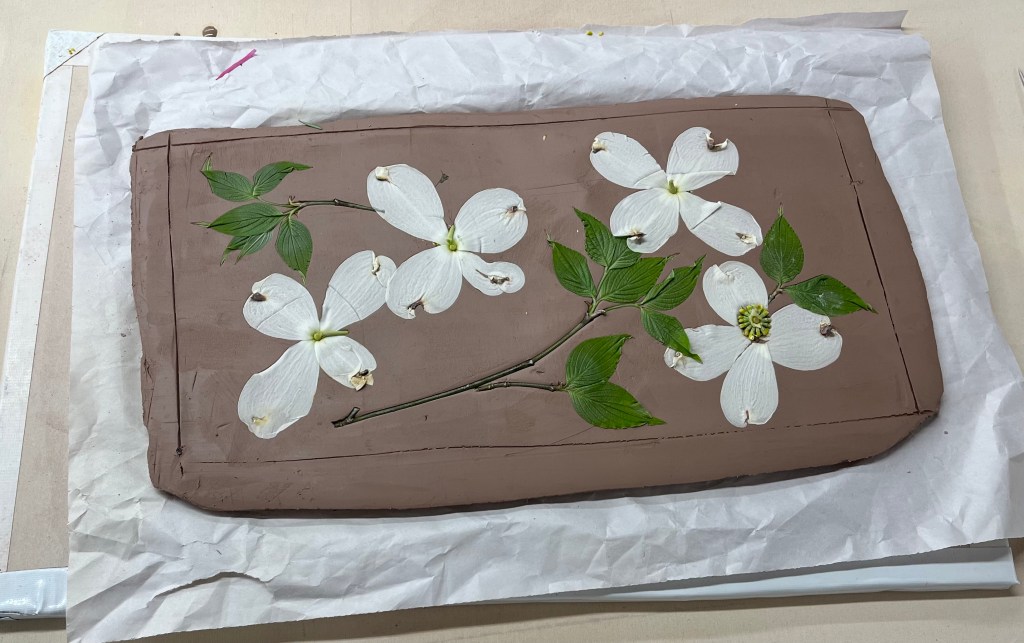
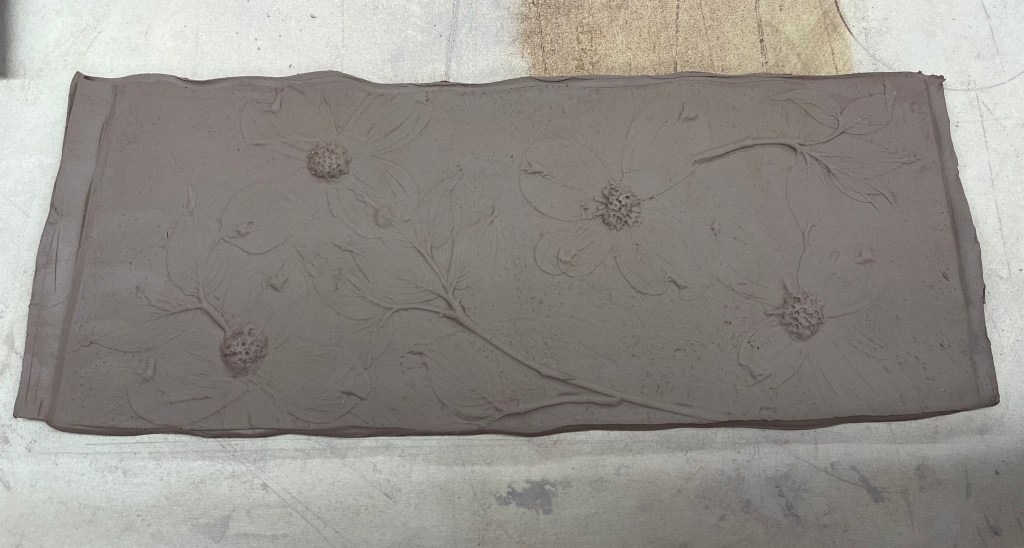
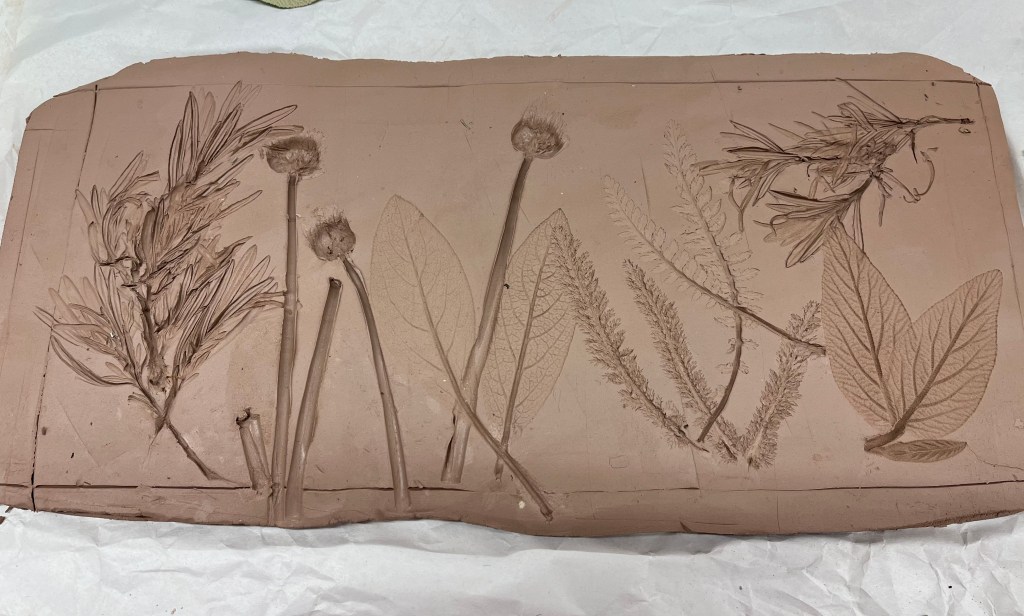
However, when I was taking my botanicals class, I found that there is another difference I didn’t expect. The scraps. So many scraps. When you are creating slabs, you roll out the clay like dough. Then you trim the edges. When you cut, just like making cookies, there are all kinds of scraps. Every adjustment you make with a tool has the potential to give you more small pieces of clay. The issue is that clay dries out when it is exposed to air, especially if it is small. Dry clay is harder to work with; therefore, each scrap needs to be covered to keep it from drying out.
It was more of an adjustment than I expected. I tended to focus the pot I was creating, not the scraps I was making. I had little pieces all around my workspace. I eventually recognized that if I didn’t take care of those little guys I was going to waste pounds and pounds of clay. So, I learned to gather my scraps. As soon as I made a cut, I removed the extra and put it in a pile, which became a mountain over the course of creating. I smooshed them together so they would not dry out as fast, and kept them under plastic the whole time. In essence, I had a working scrap pile.
Can you see the metaphor? In life, I am so focused on what is going on inside of me, sometimes I forget the value of the scraps. When I cut away pieces that do not serve my purpose, I think of them as useless. Not needed. Not important. Something to be left behind. Trashed. Yet, what pottery taught me is, those pieces are not a waste. They are useful. They can be gathered up and used again. Not in the same way, but in new recycled ways. When I need a handle, I can pull from my scraps. When I have to test for sharp edges, a scrap can do the trick. If I need to do an experimental run, scraps work perfectly.
In life, it is the same. My scraps are not useless. The parts of me I cut away are still part of what made me who I am. They may no longer serve me, but their remnants are still moldable. I can shape them into something new that does fit what I need.
For example, when I had cancer I didn’t want to “bother” people by asking for help. My independent nature did not allow for me to ask. However, when I was too weak to cook or clean, I finally asked. I found it to be very humbling, but also very freeing to admit the need. Not only that, people loved helping. It blessed them to be able to do something for me when I was sick.
I cut away the pride that kept me from seeking what I needed. It was a scrap, put to the side because it did not serve me. I learned the difference between independence and interdependence. But rather than naming my independent spirit useless, I put it under wraps. Then I wedged it and prepared it to be used again. This time, as a compassionate tool, to help those who, like me, have a hard time asking for what they need. Sharing my own example of the freedom that comes from receiving the love people have to give you without condition.
It has been a life lesson, which has continued to serve me well when I truly need others to come along side me and help. I still can be headstrong and independent, but I am much quicker to cut that pride away now. I can see, that sometimes, that kind of pride is more of a hinderance than something to be celebrated. Now that pottery has reminded me that scraps can be useful, I am gathering my life scraps up so they can continue to be used to create something new.
 Michelle's Mosaic
Thanks again, Michelle, for the inspiration and fresh ideas. What a wonderful art exhibit it would be for each person to display something made from their scraps:
A tray from clay scraps; a mirror frame from broken glass; wood scraps off the floor of a carpenter shop; leather scraps from a cobbler shop; paper mache from shredded paper; rocks from a quarry; a Quilt from fabric scraps (like Dolly Parton’s coat of many colors); left over, tossed aside nails, screws, bolts from a building site; odd buttons from a taylor’s shop; and – my favorite, a meal cooked by my mother-in-law, using left overs! – Oh, and how about edited words spilling from a manuscript?
That’s a great idea. It makes me think of those who do found art and create beautiful things from throw away objects.